Types of Dental Implants | Guide to Implant Options & Benefits
- Dr Bhalla
- May 5
- 4 min read

Dental implants have become one of the most trusted and long-lasting solutions for missing teeth. If you are looking for a permanent and natural-looking replacement, understanding the different types of implants can help you make the right decision. Whether you are consulting a Dentist in Ahmedabad or exploring treatment options, this guide explains everything in simple terms.

What Are Dental Implants?
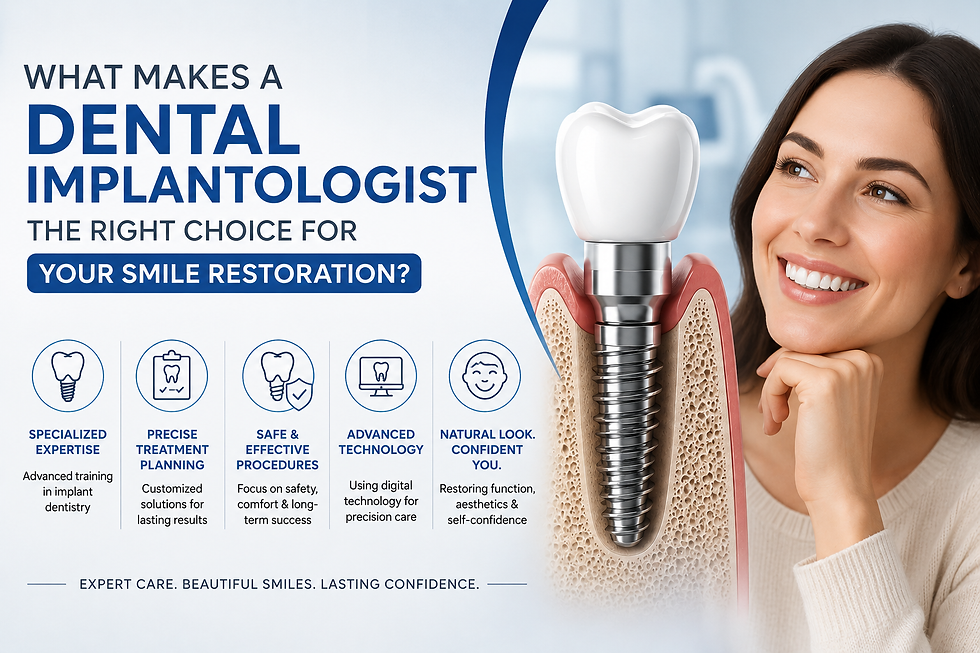
Dental implants are artificial tooth roots made of strong materials like titanium. They are placed into the jawbone to support replacement teeth such as crowns, bridges, or dentures. Over time, the implant bonds with the bone, making it stable and durable.
People often choose Dental Implants in Ahmedabad because they look, feel, and function like natural teeth. Unlike removable dentures, implants stay fixed and allow you to eat, speak, and smile with confidence.
Why Choose Dental Implants?
Before we look at the types, it helps to understand why implants are so popular:
Long-lasting solution (can last many years with care)
Natural appearance and feel
Improved chewing ability
Prevents bone loss in the jaw
No damage to nearby teeth
Boosts confidence and smile
Many patients considering Dental Implants Treatment in Ahmedabad prefer implants over traditional options because of these benefits.
Types of Dental Implants
There are different types of dental implants based on how they are placed and the condition of your jawbone.
1. Endosteal Implants (Most Common Type)
Endosteal implants are the most widely used type. These are placed directly into the jawbone.
How they work:
A screw-like implant is inserted into the bone
After healing, a crown is attached on top
Best for:
Patients with healthy and strong jawbone
Single or multiple missing teeth
Benefits:
Strong and stable
Long-lasting results
Natural look and feel
Most dentists recommend this option for patients seeking reliable Dental Implants in Ahmedabad.
2. Subperiosteal Implants
These implants are placed under the gum but above the jawbone. A metal frame holds the artificial teeth in place.
How they work:
A frame is placed on top of the jawbone
Posts come out through the gums to hold the teeth
Best for:
Patients with weak or thin jawbone
Those who cannot undergo bone grafting
Benefits:
No need for bone graft
Less invasive compared to other options
This type is less common today but still useful in specific cases.
3. Zygomatic Implants (Advanced Option)
Zygomatic implants are a more complex type and are used when the upper jawbone is not strong enough.
How they work:
Implants are anchored into the cheekbone (zygoma) instead of the jawbone
Best for:
Severe bone loss in the upper jaw
Patients who cannot get traditional implants
Benefits:
Avoids bone grafting
Suitable for complex dental cases
This procedure requires experienced professionals and is usually recommended after detailed evaluation.
Types of Implants Based on Function
Apart from placement, implants can also be classified based on how they support teeth.
1. Single Tooth Implants
Used when only one tooth is missing.
Benefits:
Does not affect nearby teeth
Looks completely natural
Easy to maintain
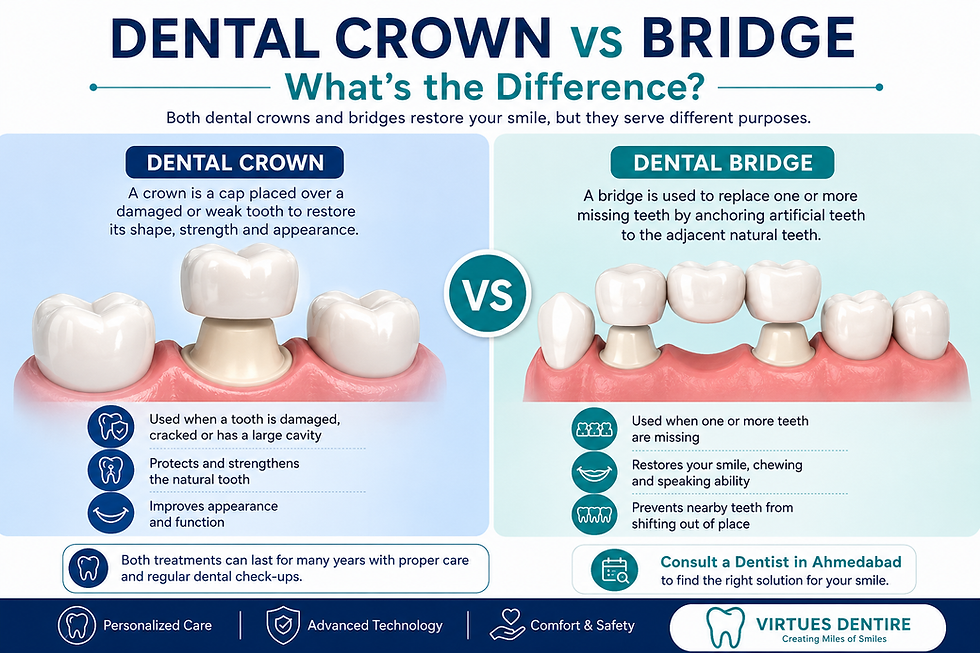
2. Implant-Supported Bridges
Used when multiple teeth are missing in a row.
Benefits:
Fewer implants required
Strong and stable
Better than traditional bridges
3. Full Mouth Implants (All-on-4 / All-on-6)
Used when all teeth are missing.
Benefits:
Full set of fixed teeth
Fewer implants support entire arch
Faster recovery in many cases
These are popular options for full-mouth Dental Implants Treatment in Ahmedabad.
Step-by-Step Dental Implant Procedure
Understanding the process can help reduce anxiety.
1. Consultation and Planning
The dentist checks your oral health, takes X-rays, and plans the treatment.
2. Implant Placement
The implant is surgically placed into the jawbone.
3. Healing Period
The bone grows around the implant. This process is called osseointegration and takes a few months.
4. Abutment Placement
A connector is attached to the implant.
5. Crown Placement
A custom-made tooth is fixed on top.
Benefits of Dental Implants
Here are some clear advantages:
1. Natural Look
Implants match the shape and color of your natural teeth.
2. Strong and Stable
They do not slip or move like dentures.
3. Better Oral Health
They help maintain jawbone and prevent bone loss.
4. Long-Term Solution
With proper care, implants can last for many years.
5. Improved Confidence
You can smile, eat, and speak without worry.
Who Is a Good Candidate?
You may be suitable for implants if:
You have one or more missing teeth
Your gums are healthy
You have enough bone support (or are willing for grafting)
You maintain good oral hygiene
A qualified Dentist in Ahmedabad can guide you after a proper examination.
Cost of Dental Implants in Ahmedabad
The cost of Dental Implants in Ahmedabad depends on several factors:
Type of implant used
Number of implants required
Need for bone grafting
Clinic technology and expertise
Although implants may seem expensive initially, they are a long-term investment in your oral health.
Aftercare Tips for Dental Implants
Taking care of implants is simple but important.
Brush twice daily
Floss regularly
Avoid smoking
Visit your dentist for regular check-ups
Avoid hard foods during healing
Good care ensures your implants last longer and stay healthy.
Risks and Considerations
Dental implants are safe, but like any procedure, there can be minor risks:
Infection
Swelling or discomfort
Implant failure (rare)
Choosing an experienced dentist and following aftercare instructions reduces these risks.
Final Thoughts
Dental implants are one of the best solutions for replacing missing teeth. With different types available, there is an option for almost every patient. Whether you need a single tooth replacement or a full-mouth restoration, implants provide strength, comfort, and a natural appearance.
If you are planning Dental Implants Treatment in Ahmedabad, take time to understand your options and consult a qualified professional. The right choice can improve not just your smile, but your overall quality of life.

Comments